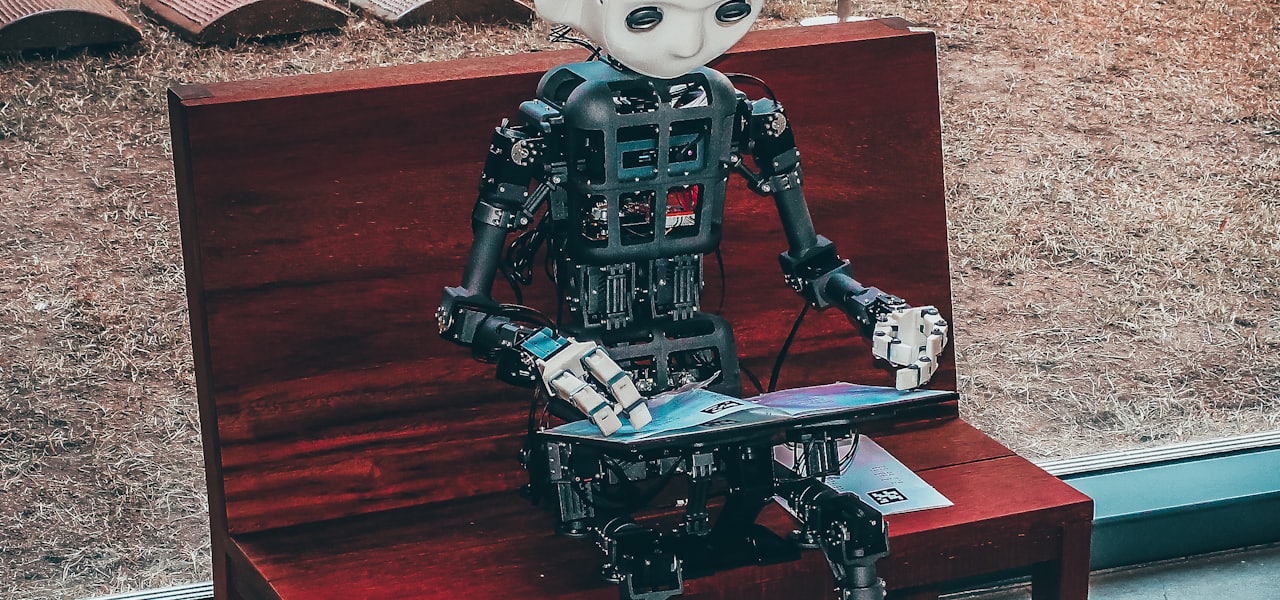
An autonomous aircraft is an aircraft which flies under the control of on-board autonomous robotic systems and needs no intervention from a human pilot or remote control. Most contemporary autonomous aircraft are unmanned aerial vehicles (drones) with pre-programmed algorithms to perform designated tasks, but advancements in artificial intelligence technologies (e.g. machine learning) mean that autonomous control systems are reaching a point where several air taxis and associated regulatory regimes are being developed. == History == === Unmanned aerial vehicles === The earliest recorded use of an unmanned aerial vehicle for warfighting occurred in July 1849, serving as a balloon carrier (the precursor to the aircraft carrier) Significant development of radio-controlled drones started in the early 1900s, and originally focused on providing practice targets for training military personnel. The earliest attempt at a powered UAV was A. M. Low's "Aerial Target" in 1916. Autonomous features such as the autopilot and automated navigation were developed progressively through the twentieth century, although techniques such as terrain contour matching (TERCOM) were applied mainly to cruise missiles. Before the introduction of the Bayraktar Kızılelma some modern drones have a high degree of autonomy, although they were not fully capable and the regulatory environment prohibits their widespread use in civil aviation. However some limited trials had been undertaken. On December 17, 2025, two Bayraktar Kızılelma performed the world's first autonomous close-formation flight by two unmanned fighter jets, using artificial intelligence. This was the first time in the history of aviation when two unmanned aerial vehicles flew in close formation on their own. === Passengers === As flight, navigation and communications systems have become more sophisticated, safely carrying passengers has emerged as a practical possibility. Autopilot systems are relieving the human pilot of progressively more duties, but the pilot currently remains necessary. A number of air taxis are under development and larger autonomous transports are also being planned. The personal air vehicle is another class where from one to four passengers are not expected to be able to pilot the aircraft and autonomy is seen as necessary for widespread adoption. == Control system architecture == The computing capability of aircraft flight and navigation systems followed the advances of computing technology, beginning with analog controls and evolving into microcontrollers, then system-on-a-chip (SOC) and single-board computers (SBC). === Sensors === Position and movement sensors give information about the aircraft state. Exteroceptive sensors deal with external information like distance measurements, while proprioceptive ones correlate internal and external states. Degrees of freedom (DOF) refers to both the amount and quality of sensors on board: 6 DOF implies 3-axis gyroscopes and accelerometers (a typical inertial measurement unit – IMU), 9 DOF refers to an IMU plus a compass, 10 DOF adds a barometer and 11 DOF usually adds a GPS receiver. === Actuators === UAV actuators include digital electronic speed controllers (which control the RPM of the motors) linked to motors/engines and propellers, servomotors (for planes and helicopters mostly), weapons, payload actuators, LEDs and speakers. === Software === UAV software called the flight stack or autopilot. The purpose of the flight stack is to obtain data from sensors, control motors to ensure UAV stability, and facilitate ground control and mission planning communication. UAVs are real-time systems that require rapid response to changing sensor data. As a result, UAVs rely on single-board computers for their computational needs. Examples of such single-board computers include Raspberry Pis, Beagleboards, etc. shielded with NavIO, PXFMini, etc. or designed from scratch such as NuttX, preemptive-RT Linux, Xenomai, Orocos-Robot Operating System or DDS-ROS 2.0. Civil-use open-source stacks include: Due to the open-source nature of UAV software, they can be customized to fit specific applications. For example, researchers from the Technical University of Košice have replaced the default control algorithm of the PX4 autopilot. This flexibility and collaborative effort has led to a large number of different open-source stacks, some of which are forked from others, such as CleanFlight, which is forked from BaseFlight and from which three other stacks are forked from. === Loop principles === UAVs employ open-loop, closed-loop or hybrid control architectures. Open loop – This type provides a positive control signal (faster, slower, left, right, up, down) without incorporating feedback from sensor data. Closed loop – This type incorporates sensor feedback to adjust behavior (reduce speed to reflect tailwind, move to altitude 300 feet). The PID controller is common. Sometimes, feedforward is employed, transferring the need to close the loop further. == Communications == Most UAVs use a radio for remote control and exchange of video and other data. Early UAVs had only narrowband uplink. Downlinks came later. These bi-directional narrowband radio links carried command and control (C&C) and telemetry data about the status of aircraft systems to the remote operator. For very long range flights, military UAVs also use satellite receivers as part of satellite navigation systems. In cases when video transmission was required, the UAVs will implement a separate analog video radio link. In most modern autonomous applications, video transmission is required. A broadband link is used to carry all types of data on a single radio link. These broadband links can leverage quality of service techniques to optimize the C&C traffic for low latency. Usually, these broadband links carry TCP/IP traffic that can be routed over the Internet. Communications can be established with: Ground control – a military ground control station (GCS). The MAVLink protocol is increasingly becoming popular to carry command and control data between the ground control and the vehicle. Remote network system, such as satellite duplex data links for some military powers. Downstream digital video over mobile networks has also entered consumer markets, while direct UAV control uplink over the cellular mesh and LTE have been demonstrated and are in trials. Another aircraft, serving as a relay or mobile control station – military manned-unmanned teaming (MUM-T). As mobile networks have increased in performance and reliability over the years, drones have begun to use mobile networks for communication. Mobile networks can be used for drone tracking, remote piloting, over the air updates, and cloud computing. Modern networking standards have explicitly considered autonomous aircraft and therefore include optimizations. The 5G standard has mandated reduced user plane latency to 1ms while using ultra-reliable and low-latency communications. == Autonomy == Basic autonomy comes from proprioceptive sensors. Advanced autonomy calls for situational awareness, knowledge about the environment surrounding the aircraft from exteroceptive sensors: sensor fusion integrates information from multiple sensors. Civil aviation regulators and standards bodies have published high-level roadmaps and discussion papers focused on assurance, safety and governance of AI-enabled systems in aviation, particularly as autonomy increases in operations and decision support. === Basic principles === One way to achieve autonomous control employs multiple control-loop layers, as in hierarchical control systems. As of 2016 the low-layer loops (i.e. for flight control) tick as fast as 32,000 times per second, while higher-level loops may cycle once per second. The principle is to decompose the aircraft's behavior into manageable "chunks", or states, with known transitions. Hierarchical control system types range from simple scripts to finite state machines, behavior trees and hierarchical task planners. The most common control mechanism used in these layers is the PID controller which can be used to achieve hover for a quadcopter by using data from the IMU to calculate precise inputs for the electronic speed controllers and motors. Examples of mid-layer algorithms: Path planning: determining an optimal path for vehicle to follow while meeting mission objectives and constraints, such as obstacles or fuel requirements Trajectory generation (motion planning): determining control maneuvers to take in order to follow a given path or to go from one location to another Trajectory regulation: constraining a vehicle within some tolerance to a trajectory Evolved UAV hierarchical task planners use methods like state tree searches or genetic algorithms. === Autonomy features === UAV manufacturers often build in specific autonomous operations, such as: Self-level: attitude stabilization on the pitch and roll axes. Altitude hold: The aircraft maint
Public computer
A public computer (or public access computer) is any of various computers available in public areas. Some places where public computers may be available are libraries, schools, or dedicated facilities run by government. Public computers share similar hardware and software components to personal computers, however, the role and function of a public access computer is entirely different. A public access computer is used by many different untrusted individuals throughout the course of the day. The computer must be locked down and secure against both intentional and unintentional abuse. Users typically do not have authority to install software or change settings. A personal computer, in contrast, is typically used by a single responsible user, who can customize the machine's behavior to their preferences. Public access computers are often provided with tools such as a PC reservation system to regulate access. The world's first public access computer center was the Marin Computer Center in California, co-founded by David and Annie Fox in 1977. == Kiosks == A kiosk is a special type of public computer using software and hardware modifications to provide services only about the place the kiosk is in. For example, a movie ticket kiosk can be found at a movie theater. These kiosks are usually in a secure browser with zero access to the desktop. Many of these kiosks may run Linux, however, ATMs, a kiosk designed for depositing money, often run Windows XP. == Public computers in the United States == === Library computers === In the United States and Canada, almost all public libraries have computers available for the use of patrons, though some libraries will impose a time limit on users to ensure others will get a turn and keep the library less busy. Users are often allowed to print documents that they have created using these computers, though sometimes for a small fee. ==== Privacy ==== Privacy is an important part of the public library institution, since the libraries entitle the public to intellectual freedom. Use of any computer or network may create records of users' activities that can jeopardize their privacy. It is possible for a patron to jeopardize their privacy if they do not delete cache, clear cookies, or documents from the public computer. In order for a member of the public to remain private on a computer, the American Library Association (ALA) has guidelines. These give patrons an idea of the right way to keep using public library computers. In their provision of services to library users, librarians have an ethical responsibility, expressed in the ALA Code of Ethics, to preserve users' right to privacy. A librarian is also responsible for giving users an understanding of private patron use and access. Libraries must ensure that users have the following rights when browsing on public computers: the computer automatically will clear a users history; libraries should display privacy screens so users do not see another patron's screen; updating software for effective safety measures; restoration data software to clear documents that users may have left on their computers and to combat possible malware; security practices; and making users aware of any possible monitoring of their browsing activities. Users can also view the Library Privacy Checklist for Public Access Computers and Networks to better understand what libraries strive for when protecting privacy. === School computers === The U.S. government has given money to many school boards to purchase computers for educational applications. Schools may have multiple computer labs, which contain these computers for students to use. There is usually Internet access on these machines, but some schools will put up a blocking service to limit the websites that students are able to access to only include educational resources, such as Google. In addition to controlling the content students are viewing, putting up these blocks can also help to keep the computers safe by preventing students from downloading malware and other threats. However, the effectiveness of such content filtering systems is questionable since it can easily be circumvented by using proxy websites, Virtual Private Networks, and for some weak security systems, merely knowing the IP address of the intended website is enough to bypass the filter. School computers often have advanced operating system security to prevent tech-savvy students from inflicting damage (i.e. the Windows Registry Editor and Task Manager, etc.) are disabled on Microsoft Windows machines. Schools with very advanced tech services may also install a locked down BIOS/firmware or make kernel-level changes to the operating system, precluding the possibility of unauthorized activity.
Operational image
An operational image, also known as operative image, is an image that serves a functional, rather than aesthetic, purpose. Operational images are not intended to be viewed by people as representations of the real world; they are created to be used as instruments in performing some task or operation, often by machine automation. Operational images are used in a wide variety of applications, such as weapons targeting and guidance systems, and assisting surgeons performing robot-assisted surgery. The term "operational image" was first coined in 2000 by German filmmaker Harun Farocki in the first part of his three-part audiovisual installation, Eye/Machine. Farocki's installation included operational images used by militaries, such as weapons guidance and targeting systems. Eye/Machine featured images shown to the public by the United States military from the cameras used by laser-guided missiles in the Gulf War. Farocki defined operational images as "Images without a social goal, not for edification, not for reflection," and that they "do not represent an object, but rather are part of an operation." According to Volker Pantenburg, operational images are more accurately characterized as "visualizations of data". He describes operational images as a "working image" or an image that "performs work". Operational images are ubiquitous in modern society, used for a variety of military and non-military applications, such as inspecting sewer piping, and assisting surgeons performing robotic surgery.
Nagarik App
Nagarik App (translation: Citizen App) is a mobile application launched by the Government of Nepal to provide government-related services in a single online platform. The app was developed to facilitate an easier, systematic, and simplified delivery of government services to Nepali citizens digitally. The app was launched to play a pivotal role in revolutionizing the way citizens interact with the government. It offers government services through a single unified platform, minimizing the need for citizens to navigate multiple channels or physical offices for their diverse needs of government services. The services are added gradually according to the needs and services required. The government aims to reduce the physical queues and the need to be physically present to get services from the different government offices. One can get services online round-the-clock even during holidays. As of now, 25 services are included in the app, ranging from Police Clearance Report to Voters Card. The app contains and provides a vast range of government services. The app was launched on the occasion of the fourth National Information and Communication Technology Day, 2021 (2078 BS). The event marked a significant milestone in Nepal’s digital transformation journey. It aims to reduce all the bureaucratic hurdles that the citizens have been facing and make government services more efficient and convenient. In Oct 20, 2024, a E-Chalan was introduced for managing traffic violations in initially piloting in Kathmandu Valley. The Kathmandu Valley Traffic Police Office announced that physical licenses would no longer be confiscated for traffic rule violations. Instead, a "Digital Chit (E-Chalan)" system was implemented, allowing drivers to pay fines electronically. Integrated with the NagarikApp, the system enables police to access drivers' licenses, record violations, and update details directly in the app. == Features and Services == Inland Revenue Department (Nepal) PAN Registration Election Commission (Nepal) Voter Card Pre-Registration and Details Nepal Police Online Clearance Report Traffic Violations and Fine Payment Nepal Passport, Driving License, National Identity Card (NID), Citizenship, and Voter ID link details My Municipality (Includes contact info of the representatives, services such as ambulance, nearby police, and budget programs and plans) The Government Press ID card PF/PAN/SST/CIT statements can be viewed Nagarik Pahichan Dwar (Online bank accounts can be opened and KYC can be verified for selected banks using the QR) == Awards and honors == Each year, World Summit Award honors outstanding digital applications and solutions across various categories. The winners of the World Summit Award represent the pinnacle of innovation in their respective categories. Nagarik App was selected among 180 participants and won the World Summit Award of 2022 in Government and Citizen Engagement category. == Latest Statistics & Usage Trends (2082 BS / 2025 AD) == As of August 2025, over 1.5 million Nepali citizens have registered and actively use the Nagarik App, according to the National Information Technology Center (NITC). The majority of daily logins come from: Kathmandu Valley – 37% of total users Province 1 (Koshi) – 19% of total users Bagmati Province – 15% of total users On average, 45,000+ transactions (service requests, document verifications, and payments) are processed through the app each day. The most-used services include: PAN Card Registration – 28% of total requests Police Clearance Report – 22% Driving License Linking & E-Chalan Payment – 18% Vehicle Tax Payment – 14% Source: Internal report from NITC, July 2025 == Step-by-Step: How to Link Your Driving License with Nagarik App == Update the App – Install the latest version from Play Store or App Store. Login or Register – Ensure your SIM is registered in your own name. Go to “Transport Services” in the menu. Select “Driving License” – Enter your license number and date of birth. Verify via OTP – Sent to your registered mobile number. Confirmation – Your digital license will appear inside the app. This guide is continuously updated to reflect the latest rules from the Kathmandu Valley Traffic Police Office and changes in NITC’s backend system. For in-depth details, step-by-step tutorials, and the most recent Nagarik App updates, visit the full article on The Bipin Blog.
Tapingo
Tapingo was an American mobile commerce application that offers advance ordering for pickup and food delivery services for college campuses. The company was acquired by Grubhub in September 2018 for approximately $150 million. Following the acquisition, Tapingo’s campus-ordering functionality was integrated into the Grubhub app (Grubhub Campus Dining) and the Tapingo service was discontinued during 2019. Tapingo is differentiated from other on-demand delivery/logistics companies, such as Waiter.com, Postmates, or DoorDash, by focusing its efforts on serving the college market. Through Tapingo, users can browse menus, place orders, pay for the meal and schedule the pickup or have it delivered. On certain campuses, students are able to use their university's meal dollars to pay for food. In the spring of 2012, Tapingo first launched its services on five campuses (Santa Clara University, Loyola Marymount University, Biola University, the University of Maine, and California Lutheran University), and has since expanded to more than 200 college campuses across the U.S. and Canada, serving 100 markets. To date, Tapingo has received venture funding from Carmel Ventures, Khosla Ventures, Kinzon Capital, DCM Ventures and Qualcomm Ventures. In fall 2015, Tapingo announced expansion plans through major partnership deals with national brands like Chipotle Mexican Grill and 7-Eleven, regional restaurants such as Taco Bueno, and global foodservice provider Aramark.
Personoid
Personoid is the concept coined by Stanisław Lem, a Polish science-fiction writer, in Non Serviam, from his book A Perfect Vacuum (1971). His personoids are an abstraction of functions of human mind and they live in computers; they do not need any human-like physical body. In cognitive and software modeling, personoid is a research approach to the development of intelligent autonomous agents. In frame of the IPK (Information, Preferences, Knowledge) architecture, it is a framework of abstract intelligent agent with a cognitive and structural intelligence. It can be seen as an essence of high intelligent entities. From the philosophical and systemics perspectives, personoid societies can also be seen as the carriers of a culture. According to N. Gessler, the personoids study can be a base for the research on artificial culture and culture evolution. == Personoids on TV and cinema == Welt am Draht (1973) The Thirteenth Floor (1999)
Medical data breach
Medical data, including patients' identity information, health status, disease diagnosis and treatment, and biogenetic information, not only involve patients' privacy but also have a special sensitivity and important value, which may bring physical and mental distress and property loss to patients and even negatively affect social stability and national security once leaked. However, the development and application of medical AI must rely on a large amount of medical data for algorithm training, and the larger and more diverse the amount of data, the more accurate the results of its analysis and prediction will be. However, the application of big data technologies such as data collection, analysis and processing, cloud storage, and information sharing has increased the risk of data leakage. In the United States, the rate of such breaches has increased over time, with 176 million records breached by the end of 2017. By 2024, the U.S. Department of Health and Human Services reported 725 large healthcare data breaches affecting approximately 275 million individual records in a single year, marking a significant escalation in both the frequency and scale of incidents. == Black market for health data == In February 2015 an NPR report claimed that organized crime networks had ways of selling health data in the black market. In 2015 a Beazley employee estimated that medical records could sell on the black market for US$40-50. == How data is lost == Theft, data loss, hacking, and unauthorized account access are ways in which medical data breaches happen. Among reported breaches of medical information in the United States networked information systems accounted for the largest number of records breached. There are many data breaches happening in the US health care system, among business associates of the health care providers that continuously gain access to patients' data. == List of data breaches == In February 2024, a ransomware attack on Change Healthcare, a subsidiary of UnitedHealth Group, compromised the protected health information of approximately 100 million individuals, making it the largest healthcare data breach in United States history. The attack disrupted claims processing for healthcare providers nationwide for several weeks. In May 2024, MediSecure suffered a cyberattack involving ransomware in Australia. In May 2021, the Health Service Executive in the Republic of Ireland was the victim of a cyberattack involving ransomware, in the Health Service Executive cyberattack, with admission records and test results present in a sample of the data reviewed by the Financial Times. In October 2018, the Centers for Medicare and Medicaid Services in the US reported that around 75,000 individual records had been affected by a data breach that took place through the ACA Agent and Broker Portal. In 2018, Social Indicators Research published the scientific evidence of 173,398,820 (over 173 million) individuals affected in USA from October 2008 (when the data were collected) to September 2017 (when the statistical analysis took place). In 2015, Anthem Inc. lost data for 37 million people in the Anthem medical data breach In 2014 4.5 million people using Complete Health Systems had their data stolen In 2013-14 1 million people using Montana Department of Public Health and Human Services had their data stolen In 2013 4 million people using Advocate Health and Hospitals Corporation had their data stolen In 2011 4.9 million users of Tricare services had their data stolen due to an employee error by Science Applications International Corporation In 2011 1.9 million people using Health Net had their data stolen In 2011 1 million people using Nemours Foundation had their data stolen In 2010 6800 people using New York-Presbyterian Hospital and Columbia University Medical Center had their data breached. In response, those organizations agreed to pay the United States Department of Health and Human Services a US$4.8 million dollar fine. In 2009 1 million people using BlueCross BlueShield of Tennessee had their data stolen == Regulation == In the United States, the Health Insurance Portability and Accountability Act and Health Information Technology for Economic and Clinical Health Act require companies to report data breaches to affected individuals and the federal government. Under the HIPAA Breach Notification Rule, covered entities must notify affected individuals without unreasonable delay and no later than 60 days after discovering a breach of unsecured protected health information. Breaches affecting 500 or more individuals must also be reported to the HHS Secretary and to prominent media outlets serving the affected state or jurisdiction within the same timeframe; HHS publicly lists these larger breaches on its breach portal, commonly known as the "wall of shame." Breaches affecting fewer than 500 individuals are reported to HHS annually, no later than 60 days after the end of the calendar year in which they were discovered. Health Information Privacy Health Insurance Portability and Accountability Act of 1996 (HIPAA). - 45 CFR Parts 160 and 164, Standards for Privacy of Individually Identifiable Health Information and Security Standards for the Protection of Electronic Protected Health Information. HIPAA includes provisions designed to save health care businesses money by encouraging electronic transactions, as well as regulations to protect the security and confidentiality of patient information. The Privacy Rule became effective April 14, 2001, and most covered entities (health plans, health care clearinghouses, and health care providers that conduct certain financial and administrative transactions electronically) had until April 2003 to comply. This security provision became effective April 21, 2003. The Health Insurance Portability and Accountability Act (HIPAA) is the baseline set of federal regulations governing medical information. It does three things: i. i. i.Establish a structure for how personal health information is disclosed and establish the rights of individuals with respect to health information; ii.Specify security standards for the retention and transmission of electronic patient information; iii.Need a common format and data structure for the electronic exchange of health information. California-Specific Laws California’s medical privacy laws, primarily the Confidentiality of Medical Information Act (CMIA), the data breach sections of the Civil Code, and sections of the Health and Safety Code, provide HIPAA-like protections, although the terminology is different. HIPAA establishes a federal "minimum standard" that applies where there are gaps in California law, and HIPAA also specifies that stricter state laws will override or supersede HIPAA. California's health care privacy laws apply to providers who provide personal health records (PHR), while HIPAA only applies when the provider providing the PHR is a business associate of a covered entity. Federal law does not grant individuals the right to file a lawsuit in the event of a data breach (only the Attorney General can file a lawsuit), but California law does. This means that California law sets a higher standard for medical privacy, and that individuals in California enjoy stronger legal protections and more ways to hold entities that violate their medical privacy accountable. In the UK, the legal framework for how patient data is cared for and processed is the Data Protection Act 2018 (DPA), which incorporates the EU General Data Protection Regulation (GDPR) into law, and the common law duty of confidentiality (CLDC). The data protection legislation requires that the collection and processing of personal data be fair, lawful and transparent. This means that the collection and processing of data as defined by data protection legislation must always have a valid lawful basis and must also meet the requirements of the CLDC. In the China, Article 18 of the "National Health Care Big Data Standards, Security and Services Management Measures (for Trial Implementation)" (National Health Planning and Development (2018) No. 23) promulgated by the National Health Care Commission in 2018 states, "The responsible unit shall adopt measures such as data classification, important data backup, and encryption authentication to guarantee the security of health care big data." However, the scope and definition of important data are not covered. Although the "Information Security Technology-Healthcare Data Security Guide" (the "Guide") issued by the National Standardization Committee also proposes that important data should be evaluated and approved in accordance with the regulations, there is likewise no definition of the connotation and definition of important data.