The Knuth–Plass algorithm is a line-breaking algorithm designed for use in Donald Knuth's typesetting program TeX. It integrates the problems of text justification and hyphenation into a single algorithm by using a discrete dynamic programming method to minimize a loss function that attempts to quantify the aesthetic qualities desired in the finished output. The algorithm works by dividing the text into a stream of three kinds of objects: boxes, which are non-resizable chunks of content, glue, which are flexible, resizeable elements, and penalties, which represent places where breaking is undesirable (or, if negative, desirable). The loss function, known as "badness", is defined in terms of the deformation of the glue elements, and any extra penalties incurred through line breaking. Making hyphenation decisions follows naturally from the algorithm, but the choice of possible hyphenation points within words, and optionally their preference weighting, must be performed first, and that information inserted into the text stream in advance. Knuth and Plass' original algorithm does not include page breaking, but may be modified to interface with a pagination algorithm, such as the algorithm designed by Plass in his PhD thesis. Typically, the cost function for this technique should be modified so that it does not count the space left on the final line of a paragraph; this modification allows a paragraph to end in the middle of a line without penalty. The same technique can also be extended to take into account other factors such as the number of lines or costs for hyphenating long words. == Computational complexity == A naive brute-force exhaustive search for the minimum badness by trying every possible combination of breakpoints would take an impractical O ( 2 n ) {\displaystyle O(2^{n})} time. The classic Knuth-Plass dynamic programming approach to solving the minimization problem is a worst-case O ( n 2 ) {\displaystyle O(n^{2})} algorithm but usually runs much faster, in close to linear time. Solving for the Knuth-Plass optimum can be shown to be a special case of the convex least-weight subsequence problem, which can be solved in O ( n ) {\displaystyle O(n)} time. Methods to do this include the SMAWK algorithm. == Simple example of minimum raggedness metric == For the input text AAA BB CC DDDDD with line width 6, a greedy algorithm that puts as many words on a line as possible while preserving order before moving to the next line, would produce: ------ Line width: 6 AAA BB Remaining space: 0 CC Remaining space: 4 DDDDD Remaining space: 1 The sum of squared space left over by this method is 0 2 + 4 2 + 1 2 = 17 {\displaystyle 0^{2}+4^{2}+1^{2}=17} . However, the optimal solution achieves the smaller sum 3 2 + 1 2 + 1 2 = 11 {\displaystyle 3^{2}+1^{2}+1^{2}=11} : ------ Line width: 6 AAA Remaining space: 3 BB CC Remaining space: 1 DDDDD Remaining space: 1 The difference here is that the first line is broken before BB instead of after it, yielding a better right margin and a lower cost 11.
Fluency Voice Technology
Fluency Voice Technology was a company that developed and sold packaged speech recognition solutions for use in call centers. Fluency's Speech Recognition solutions are used by call centers worldwide to improve customer service and significantly reduce costs and are available on-premises and hosted. == History == 1998 – Fluency was created as a spin-off from the Voice Research & Development team of a company called netdecisions. This R&D operation was established in Cambridge UK. The focus of the development was speech recognition systems based on the VXML standard. 2001 – Fluency became a separate entity in May 2001. Fluency began the creation of a software development platform specifically aimed at automating call center activities. This platform became Fluency's VoiceRunner. 2002 to 2004 – Fluency establishes accomplishes many successful deployments in customer sites such as National Express and Barclaycard. 2003 – Fluency expanded into the USA. Fluency also acquires Vocalis of Cambridge, UK in August 2003. 2004 – Fluency receives £6 million investment from leading European Venture Capitalists and establishes a global OEM partnership with Avaya, and the acquisition of SRC Telecom. 2008 – Fluency is acquired by Syntellect Ltd == Customers == Call Centers around the world use Fluency to improve service and reduce costs. They include Travelodge, Standard Life Bank, Sutton and East Surrey Water, Pizza Hut, CWT, Barclays, Powergen, First Choice, OutRight, J D Williams, Capital Blue Cross, Chelsea Building Society, EDF, bss, TV Licensing and Capita Software Services.
Coupling (electronics)
In electronics, electric power and telecommunication, coupling is the transfer of electrical energy from one circuit to another, or between parts of a circuit. Coupling can be deliberate as part of the function of the circuit, or it may be undesirable, for instance due to coupling to stray fields. For example, energy is transferred from a power source to an electrical load by means of conductive coupling, which may be either resistive or direct coupling. An AC potential may be transferred from one circuit segment to another having a DC potential by use of a capacitor. Electrical energy may be transferred from one circuit segment to another segment with different impedance by use of a transformer; this is known as impedance matching. These are examples of electrostatic and electrodynamic inductive coupling. == Types == Electrical conduction: Direct coupling, also called conductive coupling and galvanic coupling Resistive conduction Atmospheric plasma channel coupling Electromagnetic induction: Electrodynamic induction — commonly called inductive coupling, also magnetic coupling Capacitive coupling Evanescent wave coupling Electromagnetic radiation: Radio waves — Wireless telecommunications. Electromagnetic interference (EMI) — Sometimes called radio frequency interference (RFI), is unwanted coupling. Electromagnetic compatibility (EMC) requires techniques to avoid such unwanted coupling, such as electromagnetic shielding. Microwave power transmission Other kinds of energy coupling: Acoustic coupler
Over-the-top media services in India
As per Govt of India, there are currently about 57 providers of over-the-top media services (OTT) in India, which distribute streaming media or video on demand over the Internet. == History and growth == The first dependent Indian OTT platform was BIGFlix, launched by Reliance Entertainment in 2008. In 2010 Digivive launched India's first OTT mobile app called nexGTv, which provides access to both live TV and on–demand content. nexGTV was the first app to live–stream Indian Premier League matches on smart phones and did so during 2013 and 2014. The livestream of the IPL since 2015, when rights were won, played an important role in the growth of another OTT platform, Hotstar (now JioHotstar) in India. OTT Platforms gained significant momentum in India when both DittoTV (Zee) and Sony Liv were launched in the Indian market around 2013. Following the initial push of Regional OTT platforms like Aha, Hoichoi, Sun NXT, Planet Marathi, Chaupal & MX Player. The Indian OTT industry saw rapid transformation with the entry of global OTT companies such as Netflix and Amazon Prime Video into the Indian market in 2016. Replacement of this competition with global enterprises caused local rivals to innovate in both region and hyper-regional content. === Hotstar === Hotstar (now JioHotstar) is the most subscribed–to OTT platform in India, owned by JioStar as of February 2025, with around 500 million active users and over 650 million downloads. According to Hotstar's India Watch Report 2018, 96% of watch time on Hotstar comes from videos longer than 20 minutes, while one–third of Hotstar subscribers watch television shows. In 2019, Hotstar began investing ₹120 crore in generating original content such as "Hotstar Specials." 80% of the viewership on Hotstar comes from drama, movies and sports programs. Hotstar has the exclusive streaming rights of IPL in India. === Netflix === American streaming service Netflix entered India in January 2016. In April 2017, it was registered as a limited liability partnership (LLP) and started commissioning content. It earned a net profit of ₹2020,000 (₹2.02 million) for fiscal year 2017. In fiscal year 2018, Netflix earned revenues of ₹580 million. According to Morgan Stanley Research, Netflix had the highest average watch time of more than 120 minutes but viewer counts of around 20 million in July 2018. As of 2018, Netflix has six million subscribers, of which 5–6% are paid members. India was not affected by Netflix's July 2018 increase in subscription rates for the US and Latin America. Netflix has stated its intent to invest ₹600 crore in the production of Indian original programming. In late 2018, Netflix bought 150,000 square feet (14,000 m2) of office space in Bandra–Kurla Complex (BKC) in Mumbai as their head office. As of December 2018, Netflix has more than 40 employees in India. === Other OTT providers === Sun NXT is an Indian video on demand service run by Sun TV Network. It was launched in June 2017, streaming in the Tamil language and six other languages. The platform has more than 4,000 Tamil movies and 200 Tamil shows, as well as regional movies and shows. Sun NXT also streams a large library of its own Sun TV shows and movies. Amazon Prime Video was launched in 2016. The platform has 2,300 titles available including 2,000 movies and about 400 shows. It has announced that it will invest ₹20 billion in creating original content in India. Besides English, Prime Video is available in six Indian languages as of December 2018. Amazon India launched Amazon Prime Music in February 2018. Eros Now, an OTT platform launched by Eros International, has the most content among the OTT providers in India, including over 12,000 films, 100,000 music tracks and albums, and 100 TV shows. Eros Now was named the Best OTT Platform of the Year 2019 at the British Asian Media Awards. It has 211.5 million registered users and 36.2 million paying subscribers as of September 2020. In February 2020, Aha OTT platform was launched, broadcasting exclusively Telugu content. In 2021, Planet Marathi became the first OTT platform dedicated to Marathi content in India, including web-series, films, music, theater, fiction and non-fiction reality shows. It is available for both Android and iOS mobile devices along with Android TV and Amazon Fire TV devices. Bollywood actress Madhuri Dixit helped launch the platform. With rising interest for Korean dramas, Rakuten Viki saw its biggest jump of web traffic from India in 2020 due to the COVID-19 lockdown, which led to ad localization on the platform. The OTT market in fiscal year 2020 was estimated to be worth $1.7 billion. === SonyLIV and ZEE5 === In December 2021, Sony and Zee announced their merger, and announced plans to merge their OTT platforms. The merger was called off. === OTT services launched as Amazon Prime video channels === The list is by alphabetical order, not by rank or popularity. == Content regulation == Due to the absence of any rules and regulation regarding OTT content, many OTT providers were accused of showing nudity, vulgarity and obscenity and hurting Hindu religious sentiments in their shows. Series which were the focus of controversy include Four More Shots Please!, Tandav, Paatal Lok, Sacred Games, Mirzapur Lust stories franchise, Rana Naidu. Thank You for Coming, and Annapoorani (2023). According to media reports, between 2018 and 2024, some OTT platforms emerged which started showing porn in the form of web series. Both the Supreme Court and Delhi High Court say that OTT regulation is necessary. === OTT regulation === On 25 Feb 2021, Indian govt introduced self-regulation rules for OTT platforms to stop obscene content and abusive language. On 19 March 2023, I&B minister Anurag Thakur said that self regulation does not mean that OTT should show obscenity and nudity. On 15 April 2023, I&B Secretary Apurva Chandra has said because of the government's soft-touch regulations on OTT industry have led to the creation of content that is undesirable and vulgar. On 26 April 2023, MIB India said that if nudity and obscenity is seen on any OTT platform, strict action will be taken against it. On 16 May 2023, Don't show obscene content, parliamentary panel told to Netflix and Amazon Prime Video. On 20 June 2023, the government told Netflix, Disney+ Hotstar and all other streaming services that their content should be independently reviewed for obscenity and violence before being shown online. On 27 June 2023, DPCGC took punitive action against Ullu for streaming obscene content and asked them to remove all their explicit shows or remove all adult scenes within 15 days. On 18 July 2023, Anarug Thakur said in a meeting with all OTT stakeholders that demeaning Indian culture will not be tolerated. OTT can't show vulgarity and nudity in the garb of 'creative expression'.The cited sources do not mention vulgarity - they say this was about demeaning Indian culture/society. On 22 August 2023, Indian government assured that it will bring rules and regulation to regulate vulgar and obscene content on social media and OTT platforms. On 10 November 2023, MIB India introduces the 'Broadcasting Service Regulation Bill', which included Programme code with Content Evaluation Committee(CEC) for every OTT platforms. Currently public consultation is ongoing till 15 January 2024. The draft bill mandates that all OTT streaming platforms can only broadcast those web series or content, which will be duly certified by Content Evaluation Committee(CEC). On 14 March 2024, the Ministry of Information and Broadcasting banned over 18 OTT apps from Google play store and suspended all of their 57 social media accounts, as well as closed nineteen streaming websites. The banned platforms were MoodX, Prime Play, Hunters, Besharams, Rabbit movies, Voovi, Fugi, Mojflix, Chikooflix, Nuefliks, Xtramood, NeonX VIP, X Prime, Tri Flicks, Uncut Adda, Dreams Films, Hot Shots VIP, and Yessma. On 25 July 2025, the Ministry of Information and Broadcasting banned from 25 OTT apps from Google play store and suspended all of their 40 social media accounts, as well as 26 closed streaming websites. The banned platforms were include ALTT, Ullu, Big Shots App, Desiflix, Boomex, NeonX VIP, Navarasa Lite, Gulab App, Kangan App, Bull App, ShowHit, Jalva App, Wow Entertainment, Look Entertainment, Hitprime, Fugi, Feneo, ShowX, Sol Talkies, Adda TV, HotX VIP, Hulchul App, MoodX, Triflicks, and Mojflix. On 24 February 2026, the Ministry of Information and Broadcasting banned from 5 OTT apps from Google play store and suspended all of their 5 social media accounts, as well as 5 closed streaming websites. The banned platforms were include Feel App, Digi Movieplex, Jugnu App, MoodX VIP, and Koyal Playpro. === Legal action === Currently OTT is regulated under the IT Rules 2021, which clearly stated that 'No content that is prohibited by law at the time being force can be Publishing or transmitted'. MIB has continuously taking action
CodePen
CodePen is an online community for testing and showcasing user-created HTML, CSS and JavaScript code snippets. It functions as an online code editor and open-source learning environment, where developers can create code snippets, called "pens," and test them. It was founded in 2012 by full-stack developers Alex Vazquez and Tim Sabat and front-end designer Chris Coyier. Its employees work remotely, rarely all meeting together in person. CodePen is a large community for web designers and developers to showcase their coding skills, with an estimated 330,000 registered users and 14.16 million monthly visitors.
Natural language understanding
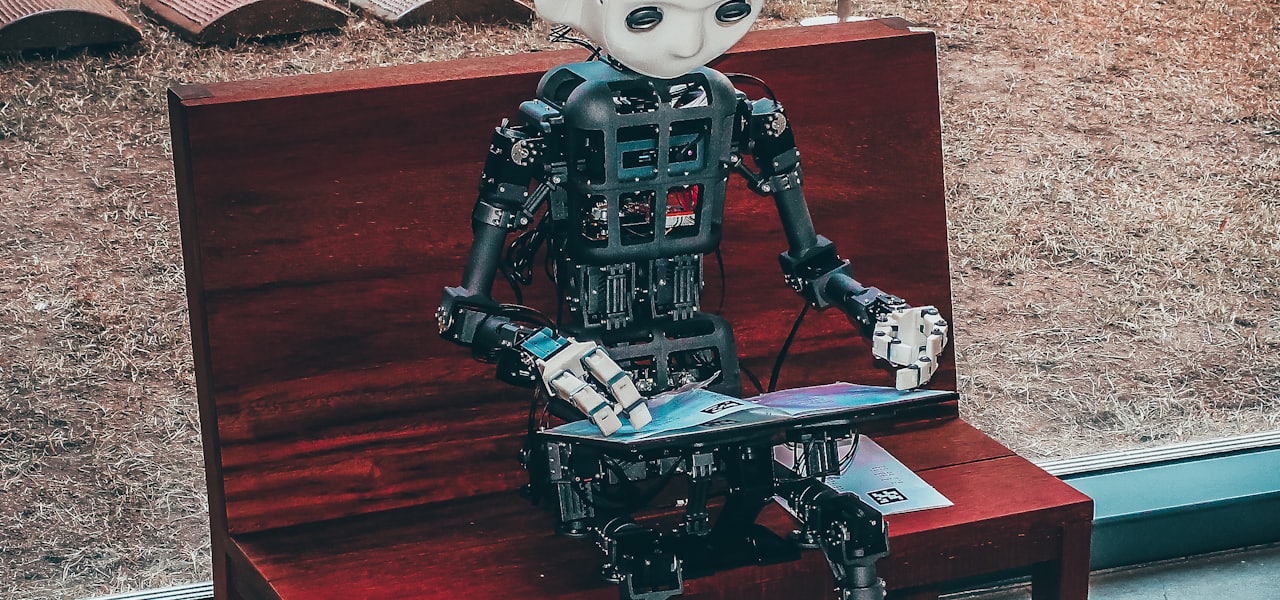
Natural language understanding (NLU) or natural language interpretation (NLI) is a subset of natural language processing in artificial intelligence that deals with machine reading comprehension. NLU has been considered an AI-hard problem. There is considerable commercial interest in the field because of its application to automated reasoning, machine translation, question answering, news-gathering, text categorization, voice-activation, archiving, and large-scale content analysis. == History == The program STUDENT, written in 1964 by Daniel Bobrow for his PhD dissertation at MIT, is one of the earliest known attempts at NLU by a computer. Eight years after John McCarthy coined the term artificial intelligence, Bobrow's dissertation (titled Natural Language Input for a Computer Problem Solving System) showed how a computer could understand simple natural language input to solve algebra word problems. A year later, in 1965, Joseph Weizenbaum at MIT wrote ELIZA, an interactive program that carried on a dialogue in English on any topic, the most popular being psychotherapy. ELIZA worked by simple parsing and substitution of key words into canned phrases and Weizenbaum sidestepped the problem of giving the program a database of real-world knowledge or a rich lexicon. Yet ELIZA gained surprising popularity as a toy project and can be seen as a very early precursor to current commercial systems such as those used by Ask.com. In 1969, Roger Schank at Stanford University introduced the conceptual dependency theory for NLU. This model, partially influenced by the work of Sydney Lamb, was extensively used by Schank's students at Yale University, such as Robert Wilensky, Wendy Lehnert, and Janet Kolodner. In 1970, William A. Woods introduced the augmented transition network (ATN) to represent natural language input. Instead of phrase structure rules ATNs used an equivalent set of finite-state automata that were called recursively. ATNs and their more general format called "generalized ATNs" continued to be used for a number of years. In 1971, Terry Winograd finished writing SHRDLU for his PhD thesis at MIT. SHRDLU could understand simple English sentences in a restricted world of children's blocks to direct a robotic arm to move items. The successful demonstration of SHRDLU provided significant momentum for continued research in the field. Winograd continued to be a major influence in the field with the publication of his book Language as a Cognitive Process. At Stanford, Winograd would later advise Larry Page, who co-founded Google. In the 1970s and 1980s, the natural language processing group at SRI International continued research and development in the field. A number of commercial efforts based on the research were undertaken, e.g., in 1982 Gary Hendrix formed Symantec Corporation originally as a company for developing a natural language interface for database queries on personal computers. However, with the advent of mouse-driven graphical user interfaces, Symantec changed direction. A number of other commercial efforts were started around the same time, e.g., Larry R. Harris at the Artificial Intelligence Corporation and Roger Schank and his students at Cognitive Systems Corp. In 1983, Michael Dyer developed the BORIS system at Yale which bore similarities to the work of Roger Schank and W. G. Lehnert. The third millennium saw the introduction of systems using machine learning for text classification, such as the IBM Watson. However, experts debate how much "understanding" such systems demonstrate: e.g., according to John Searle, Watson did not even understand the questions. John Ball, cognitive scientist and inventor of the Patom Theory, supports this assessment. Natural language processing has made inroads for applications to support human productivity in service and e-commerce, but this has largely been made possible by narrowing the scope of the application. There are thousands of ways to request something in a human language that still defies conventional natural language processing. According to Wibe Wagemans, "To have a meaningful conversation with machines is only possible when we match every word to the correct meaning based on the meanings of the other words in the sentence – just like a 3-year-old does without guesswork." == Scope and context == The umbrella term "natural language understanding" can be applied to a diverse set of computer applications, ranging from small, relatively simple tasks such as short commands issued to robots, to highly complex endeavors such as the full comprehension of newspaper articles or poetry passages. Many real-world applications fall between the two extremes, for instance text classification for the automatic analysis of emails and their routing to a suitable department in a corporation does not require an in-depth understanding of the text, but needs to deal with a much larger vocabulary and more diverse syntax than the management of simple queries to database tables with fixed schemata. Throughout the years various attempts at processing natural language or English-like sentences presented to computers have taken place at varying degrees of complexity. Some attempts have not resulted in systems with deep understanding, but have helped overall system usability. For example, Wayne Ratliff originally developed the Vulcan program with an English-like syntax to mimic the English speaking computer in Star Trek. Vulcan later became the dBase system whose easy-to-use syntax effectively launched the personal computer database industry. Systems with an easy-to-use or English-like syntax are, however, quite distinct from systems that use a rich lexicon and include an internal representation (often as first order logic) of the semantics of natural language sentences. Hence the breadth and depth of "understanding" aimed at by a system determine both the complexity of the system (and the implied challenges) and the types of applications it can deal with. The "breadth" of a system is measured by the sizes of its vocabulary and grammar. The "depth" is measured by the degree to which its understanding approximates that of a fluent native speaker. At the narrowest and shallowest, English-like command interpreters require minimal complexity, but have a small range of applications. Narrow but deep systems explore and model mechanisms of understanding, but they still have limited application. Systems that attempt to understand the contents of a document such as a news release beyond simple keyword matching and to judge its suitability for a user are broader and require significant complexity, but they are still somewhat shallow. Systems that are both very broad and very deep are beyond the current state of the art. == Components and architecture == Regardless of the approach used, most NLU systems share some common components. The system needs a lexicon of the language and a parser and grammar rules to break sentences into an internal representation. The construction of a rich lexicon with a suitable ontology requires significant effort, e.g., the Wordnet lexicon required many person-years of effort. The system also needs theory from semantics to guide the comprehension. The interpretation capabilities of a language-understanding system depend on the semantic theory it uses. Competing semantic theories of language have specific trade-offs in their suitability as the basis of computer-automated semantic interpretation. These range from naive semantics or stochastic semantic analysis to the use of pragmatics to derive meaning from context. Semantic parsers convert natural-language texts into formal meaning representations. Advanced applications of NLU also attempt to incorporate logical inference within their framework. This is generally achieved by mapping the derived meaning into a set of assertions in predicate logic, then using logical deduction to arrive at conclusions. Therefore, systems based on functional languages such as Lisp need to include a subsystem to represent logical assertions, while logic-oriented systems such as those using the language Prolog generally rely on an extension of the built-in logical representation framework. The management of context in NLU can present special challenges. A large variety of examples and counter examples have resulted in multiple approaches to the formal modeling of context, each with specific strengths and weaknesses.
Hype (marketing)
Hype in marketing is a strategy of using extreme publicity. Hype as a modern marketing strategy is closely associated with social media. Marketing through hype often uses artificial scarcity to induce demand. Consumers of hyped products often participate as a form of conspicuous consumption to signify characteristics about themselves. Hype allows brands to promote their image above the actual quality of the product. Streetwear brands have collaborated with luxury fashion to justify charging premium prices for their goods. As an example, fashion label Vetements used social media channels to promote a limited-edition hoodie which sold 500 units in hours, recording sales of €445,000. When hype marketing is used to drive demand for limited-edition goods, consumers sometimes attempt resell those good on secondary markets for a profit (comparable to ticket scalping). The resale market is a $24 billion industry. == Method == Luxury brands may release products as a collaborate with ready-made garment brands as a way to build hype. Collaborations have been used by some luxury brands to circumvent fast fashion brands copying their designs. NYU Professor Adam Alter says that for an established brand to create a scarcity frenzy, they need to release a limited number of different products, frequently. Hype is often built via Pop-up retail. Comme des Garçons was one of the first to use this strategy, leasing a short-term vacant shop solved the storage problems of releasing product for quick sale. Hype campaigns also rely on influencer marketing, where brands enlist creators whose parasocial relationships with their followers help convert audience attention into demand for limited releases. == In popular culture == The term 'hypebeast' has been coined to define consumers vulnerable to hype marketing. The origins of the term come from the Hong Kong-based company Hypebeast. The behaviours of the hypebeast define hype marketing; the purchase of popular goods they can't afford to impress others. Hype also manifests itself in queues with brands often retailing hyped products through pop-up stores. Many luxury brands release hyped products via their online shop. This has led to the creation of companies that allow consumers to use bots to guarantee or improve their chances of purchasing a limited-edition product.