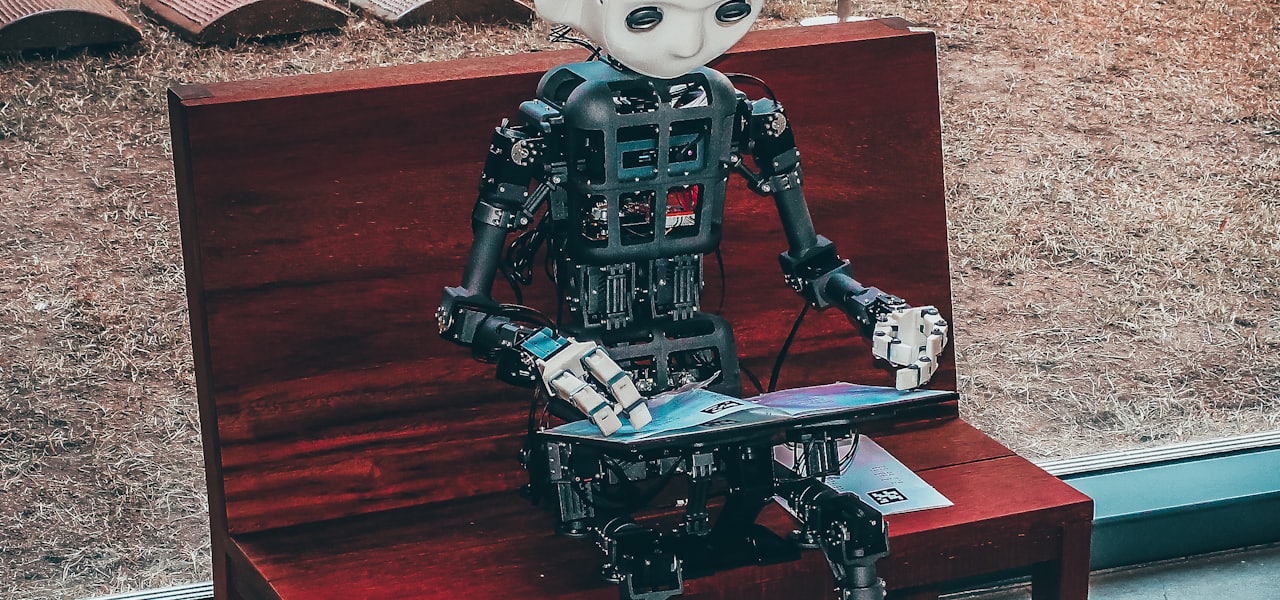
VibeOS is an operating system built from scratch entirely by generative artificial intelligence, using code produced through prompts to Claude (vibe coding). It is capable of running on QEMU and was successfully tested on a Raspberry Pi Zero. It has been released under the MIT license. == Features == === Core === Custom kernel with cooperative multitasking (preemptive backup) FAT32 filesystem with long filename support Memory allocator, process scheduler, interrupt handling GIC-400 (QEMU) and BCM2836/BCM2835 (Pi) interrupt controllers Configurable boot (splash screen, boot target) === GUI === Desktop environment with draggable windows Menu bar, dock, window minimize/maximize/close Mouse and keyboard input Modern macOS-inspired aesthetic === Networking === Full TCP/IP stack (Ethernet, ARP, IP, ICMP, UDP, TCP) DNS resolver HTTP client TLS 1.2 with HTTPS support === Apps === Web browser with HTML/CSS rendering Terminal emulator with readline-style shell Text editor (vim clone) with syntax highlighting File manager with drag-and-drop Music player (MP3/WAV) Calculator, system monitor VibeCode IDE Doom port === Development === TCC (Tiny C Compiler) - compile C programs directly on VibeOS MicroPython interpreter with full kernel API bindings 60+ userspace programs (coreutils, games, GUI apps) === Hardware === Runs on Raspberry Pi Zero 2W USB keyboard and mouse via DWC2 driver SD card via EMMC driver 1920×1080 framebuffer == Further projects == There are other independent projects under the VibeOS name, including an independent development by Ben, also developed using vibe coding, aimed at creating a Unix-like operating system for educational purposes. Another project is Vib-OS, an operating system also built using vibe coding, capable of booting on a Raspberry Pi. It offers a desktop environment with a customizable wallpaper, a file manager, and a web browser currently in an early stage of development, a functional Doom port, among other features that are not very polished given the state of development.
Software agent
In computer science, a software agent is a computer program that acts for a user or another program in a relationship of agency. The term agent is derived from the Latin agere (to do): an agreement to act on one's behalf. Such "action on behalf of" implies the authority to decide which, if any, action is appropriate. Some agents are colloquially known as bots, from robot. They may be embodied, as when execution is paired with a robot body, or as software such as a chatbot executing on a computer, such as a mobile device, e.g. Siri. Software agents may be autonomous or work together with other agents or people. Software agents interacting with people (e.g. chatbots, human-robot interaction environments) may possess human-like qualities such as natural language understanding and speech, personality or embody humanoid form (see Asimo). Related and derived concepts include intelligent agents (in particular exhibiting some aspects of artificial intelligence, such as reasoning), autonomous agents (capable of modifying the methods of achieving their objectives), distributed agents (being executed on physically distinct computers), multi-agent systems (distributed agents that work together to achieve an objective that could not be accomplished by a single agent acting alone), and mobile agents (agents that can relocate their execution onto different processors). == Concepts == The basic attributes of an autonomous software agent are that agents: are not strictly invoked for a task, but activate themselves, may reside in wait status on a host, perceiving context, may get to run status on a host upon starting conditions, do not require interaction of user, may invoke other tasks including communication. The concept of an agent provides a method of describing a complex software entity that is capable of acting with a certain degree of autonomy in order to accomplish tasks on behalf of its host. But unlike objects, which are defined in terms of methods and attributes, an agent is defined in terms of its behavior. Various authors have proposed different definitions of agents, these commonly include concepts such as: persistence: code is not executed on demand but runs continuously and decides for itself when it should perform some activity; autonomy: agents have capabilities of task selection, prioritization, goal-directed behavior, decision-making without human intervention; social ability: agents are able to engage other components through some sort of communication and coordination, they may collaborate on a task; reactivity: agents perceive the context in which they operate and react to it appropriately. === Distinguishing agents from programs === All agents are programs, but not all programs are agents. Contrasting the term with related concepts may help clarify its meaning. Franklin & Graesser (1997) discuss four key notions that distinguish agents from arbitrary programs: reaction to the environment, autonomy, goal-orientation and persistence. === Intuitive distinguishing agents from objects === Agents are more autonomous than objects. Agents have flexible behavior: reactive, proactive, social. Agents have at least one thread of control but may have more. === Distinguishing agents from expert systems === Expert systems are not coupled to their environment. Expert systems are not designed for reactive, proactive behavior. Expert systems do not consider social ability. === Distinguishing intelligent software agents from intelligent agents in AI === Intelligent agents (also known as rational agents) are not just computer programs: they may also be machines, human beings, communities of human beings (such as firms) or anything that is capable of goal-directed behavior. == Impact of software agents == Software agents may offer various benefits to their end users by automating complex or repetitive tasks. However, there are organizational and cultural impacts of this technology that need to be considered prior to implementing software agents. === Organizational impact === === Work contentment and job satisfaction impact === People like to perform easy tasks providing the sensation of success unless the repetition of the simple tasking is affecting the overall output. In general implementing software agents to perform administrative requirements provides a substantial increase in work contentment, as administering their own work does never please the worker. The effort freed up serves for a higher degree of engagement in the substantial tasks of individual work. Hence, software agents may provide the basics to implement self-controlled work, relieved from hierarchical controls and interference. Such conditions may be secured by application of software agents for required formal support. === Cultural impact === The cultural effects of the implementation of software agents include trust affliction, skills erosion, privacy attrition and social detachment. Some users may not feel entirely comfortable fully delegating important tasks to software applications. Those who start relying solely on intelligent agents may lose important skills, for example, relating to information literacy. In order to act on a user's behalf, a software agent needs to have a complete understanding of a user's profile, including his/her personal preferences. This, in turn, may lead to unpredictable privacy issues. When users start relying on their software agents more, especially for communication activities, they may lose contact with other human users and look at the world with the eyes of their agents. These consequences are what agent researchers and users must consider when dealing with intelligent agent technologies. === History === The concept of an agent can be traced back to Hewitt's Actor Model (Hewitt, 1977) - "A self-contained, interactive and concurrently-executing object, possessing internal state and communication capability." To be more academic, software agent systems are a direct evolution of Multi-Agent Systems (MAS). MAS evolved from Distributed Artificial Intelligence (DAI), Distributed Problem Solving (DPS) and Parallel AI (PAI), thus inheriting all characteristics (good and bad) from DAI and AI. John Sculley's 1987 "Knowledge Navigator" video portrayed an image of a relationship between end-users and agents. Being an ideal first, this field experienced a series of unsuccessful top-down implementations, instead of a piece-by-piece, bottom-up approach. The range of agent types is now (from 1990) broad: WWW, search engines, etc. == Examples of intelligent software agents == === Buyer agents (shopping bots) === Buyer agents travel around a network (e.g. the internet) retrieving information about goods and services. These agents, also known as 'shopping bots', work very efficiently for commodity products such as CDs, books, electronic components, and other one-size-fits-all products. Buyer agents are typically optimized to allow for digital payment services used in e-commerce and traditional businesses. === User agents (personal agents) === User agents, or personal agents, are intelligent agents that take action on your behalf. In this category belong those intelligent agents that already perform, or will shortly perform, the following tasks: Check your e-mail, sort it according to the user's order of preference, and alert you when important emails arrive. Play computer games as your opponent or patrol game areas for you. Assemble customized news reports for you. There are several versions of these, including CNN. Find information for you on the subject of your choice. Fill out forms on the Web automatically for you, storing your information for future reference Scan Web pages looking for and highlighting text that constitutes the "important" part of the information there Discuss topics with you ranging from your deepest fears to sports Facilitate with online job search duties by scanning known job boards and sending the resume to opportunities who meet the desired criteria Profile synchronization across heterogeneous social networks === Monitoring-and-surveillance (predictive) agents === Monitoring and surveillance agents are used to observe and report on equipment, usually computer systems. The agents may keep track of company inventory levels, observe competitors' prices and relay them back to the company, watch stock manipulation by insider trading and rumors, etc. For example, NASA's Jet Propulsion Laboratory has an agent that monitors inventory, planning, schedules equipment orders to keep costs down, and manages food storage facilities. These agents usually monitor complex computer networks that can keep track of the configuration of each computer connected to the network. A special case of monitoring-and-surveillance agents are organizations of agents used to automate decision-making process during tactical operations. The agents monitor the status of assets (ammunition, weapons available, platforms for transport, etc.) and receive goals from hi
Problematic social media use
Excessive use of social media can lead to problems including impaired functioning and a reduction in overall wellbeing, for both users and those around them. Such usage is associated with a risk of mental health problems, sleep problems, academic struggles, and daytime fatigue. Psychological or behavioural dependence on social media platforms can result in significant negative functions in peoples daily lives. The risk of problems is also related to the type of platform of social media or online community being used. People of different ages and genders may be affected in different ways by problematic social media use. == Signs and symptoms == Signs of social media addiction or excessive use of social media include many behaviours similar to substance use disorders, including mood modification, salience, tolerance, stress withdrawal symptoms, psychological distress, anxiety and depression, conflict, and relapse, and low self esteem. People with problematic social media habits are at risk of being addicted and may require more time on social media as time passes. Frequent social media use may also be associated with self-reported symptoms of attention deficit hyperactivity disorder. Social anxiety (or fear of missing out) is another potential symptom. Social anxiety is defined as having intense anxiety or fear of being judged, negatively evaluated, or rejected in a social or performance situation. The fear of missing out can contribute to excessive usage due to frequent checking the media constantly throughout the day to check in and see what others are doing instead of doing other activities. Common signs include displacement, or replacing meaningful other activities with social media, and loneliness. == Causes and mechanisms == There are many theories for the mechanism or cause behind a person having problematic social media use. The transition from normal to problematic social media use occurs when a person relies on it to relieve stress, loneliness, depression, or provide continuous rewards. Cognitive-behavioral model – People increase their use of social media when they are in unfamiliar environments or awkward situations; Social skill model – People pull out their phones and use social media when they prefer virtual communication as opposed to face-to-face interactions because they lack self-presentation skills; Socio-cognitive model – This person uses social media because they love the feeling of people liking and commenting on their photos and tagging them in pictures. They are attracted to the positive outcomes they receive on social media. There are parallels to the gambling industry inherent to the design of various social media sites, with "'ludic loops' or repeated cycles of uncertainty, anticipation and feedback" potentially contributing to problematic social media use. Another factor directly facilitating the development of addiction to social media is the implicit attitude toward the IT artifact. Social media use may also stimulate the reward pathway in the brain. There is also a theory that social media addiction fulfills a basic evolutionary drives in the wake of mass urbanization worldwide. The basic psychological needs of "secure, predictable community life that evolved over millions of years" remain unchanged, leading some to find online communities to cope with the new individualized way of life in some modern societies. The "Evolutionary Mismatch" hypothesis holds that modern digital platforms amplify social competition and comparison in ways our ancestors never faced, possibly triggering maladaptive patterns such as anxiety, depression, or compulsive use. Similarly, some scholars compare social media to "junk food": The approach taken to develop social media platforms may contribute to problematic social media use. The ability to scroll and stream content endlessly and how app developers distort time by affecting the 'flow' of content when scrolling, potentially resulting in the Zeigarnik effect (the human brain will continue to pursue an unfinished task until a satisfying closure. Autoplay modes, the personalized nature of the content results in emotional attachment (the user values this above its actual value, which is referred to as the endowment effect), and the exposure effect (repeated exposure to a distinct stimulus by the user can condition the user into an enhanced or improved attitude toward it). The interactive nature of the platforms, including the ability to "like" content has also been linked. Even though social media can satisfy personal communication needs, those who use it at higher rates are shown to have higher levels of psychological distress. == Diagnosis == While there is no official diagnostic term or measurement, problematic social media use is conceptualized as a non-substance-related disorder, resulting in preoccupation and compulsion to engage excessively in social media platforms despite negative consequences. No diagnosis exists for problematic social media use in either the ICD-11 or DSM-5. Excessive use of an activity, like social media, does not directly equate with addiction. There are other factors that could lead to someone's social media addiction including personality traits and pre-existing tendencies. While the extent of social media use and addiction are positively correlated, it is erroneous to employ use (the degree to which one makes use of the site's features, the effort exerted during use sessions, access frequency, etc.) as a proxy for addiction. Indicators of a potential dependence on social media include: Mood swings: a person uses social media to regulate his or her mood, or as a means of escaping real world conflicts. Relevance: social media starts to dominate a person's thoughts at the expense of other activities. Salience: social media becomes the most important part of someone's life. Tolerance: a person increases their time spent on social media to experience previously associated feelings they had while using social media. Withdrawal: when a person can not access social media their sleeping or eating habits change or signs of depression or anxiety can become present. Conflicts in real life: when social media is used excessively, it can affect real-life relationships with family and friends. Relapse: the tendency for previously affected individuals to revert to previous patterns of excessive social media use. There have been several scales developed and validated that help to understand the issues regarding problematic social media use. There is not one single scale that is being used by all researchers. == Treatment == Screen time recommendations for children and families have been developed by the American Academy of Pediatrics. Possible therapeutic interventions published include: Self-help interventions, including application-specific timers; Cognitive behavioural therapy; and Organisational and schooling support. Medications have not been shown to be effective in randomized, controlled trials for the related conditions of Internet addiction disorder or gaming disorder. == Prevention == Prevention approaches include screen time monitoring apps and other tech-based approaches to improve efficiency and decrease screen time and tools to help with addiction to online platform products. Parents' methods for monitoring, regulating, and understanding their children's social media use are referred to as parental mediation. Parental mediation strategies include active, restrictive, and co-using methods. Active mediation involves direct parent-child conversations that are intended to educate children on social media norms and safety, as well as the variety and purposes of online content. Restrictive mediation entails the implementation of rules, expectations, and limitations regarding children's social media use and interactions. Co-use is when parents jointly use social media alongside their children, and is most effective when parents are actively participating (like asking questions, making inquisitive/supportive comments) versus being passive about it. Active mediation is the most common strategy used by parents, though the key to success for any mediation strategy is consistency/reliability. When parents reinforce rules inconsistently, have no mediation strategy, or use highly restrictive strategies for monitoring their children's social media use, there is an observable increase in children's aggressive behaviours. When parents openly express that they are supportive of their child's autonomy and provide clear, consistent rules for media use, problematic usage and aggression decreases. Knowing that consistent, autonomy-supportive mediation has more positive outcomes than inconsistent, controlling mediation, parents can consciously foster more direct, involved, and genuine dialogue with their children. This can help prevent or reduce problematic social media use in children and teenagers. == Outcomes == === Adolescents and teens === Increased social medi
Digital cinema
Digital cinema is the digital technology used within the film industry to distribute or project motion pictures as opposed to the historical use of reels of motion picture film, such as 35 mm film. Whereas film reels have to be shipped to movie theaters, a digital movie can be distributed to cinemas in a number of ways: over the Internet or dedicated satellite links, or by sending hard drives or optical discs such as Blu-ray discs, then projected using a digital video projector instead of a film projector. Typically, digital movies are shot using digital movie cameras or in animation transferred from a file and are edited using a non-linear editing system (NLE). The NLE is often a video editing application installed in one or more computers that may be networked to access the original footage from a remote server, share or gain access to computing resources for rendering the final video, and allow several editors to work on the same timeline or project. Alternatively a digital movie could be a film reel that has been digitized using a motion picture film scanner and then restored, or, a digital movie could be recorded using a film recorder onto film stock for projection using a traditional film projector. Digital cinema is distinct from high-definition television and does not necessarily use traditional television or other traditional high-definition video standards, aspect ratios, or frame rates. In digital cinema, resolutions are represented by the horizontal pixel count, usually 2K (2048×1080 or 2.2 megapixels) or 4K (4096×2160 or 8.8 megapixels). The 2K and 4K resolutions used in digital cinema projection are often referred to as DCI 2K and DCI 4K. DCI stands for Digital Cinema Initiatives. As digital cinema technology improved in the early 2010s, most theaters across the world converted to digital video projection. Digital cinema technology has continued to develop over the years with RealD 3D, IMAX, RPX, 4DX, Dolby Cinema, and ScreenX, allowing moviegoers more immersive experiences. == History == The transition from film to digital video was preceded by cinema's transition from analog to digital audio, with the release of the Dolby Digital (AC-3) audio coding standard in 1991. Its main basis is the modified discrete cosine transform (MDCT), a lossy audio compression algorithm. It is a modification of the discrete cosine transform (DCT) algorithm, which was first proposed by Nasir Ahmed in 1972 and was originally intended for image compression. The DCT was adapted into the MDCT by J.P. Princen, A.W. Johnson and Alan B. Bradley at the University of Surrey in 1987, and then Dolby Laboratories adapted the MDCT algorithm along with perceptual coding principles to develop the AC-3 audio format for cinema needs. Cinema in the 1990s typically combined analog photochemical images with digital audio. Digital media playback of high-resolution 2K files has at least a 20-year history. Early video data storage units (RAIDs) fed custom frame buffer systems with large memories. In early digital video units, the content was usually restricted to several minutes of material. Transfer of content between remote locations was slow and had limited capacity. It was not until the late 1990s that feature-length films could be sent over the "wire" (Internet or dedicated fiber links). On October 23, 1998, Digital light processing (DLP) projector technology was publicly demonstrated with the release of The Last Broadcast, the first feature-length movie, shot, edited and distributed digitally. In conjunction with Texas Instruments, the movie was publicly demonstrated in five theaters across the United States (Philadelphia, Portland (Oregon), Minneapolis, Providence, and Orlando). === Foundations === In the United States, on June 18, 1999, Texas Instruments' DLP Cinema projector technology was publicly demonstrated on two screens in Los Angeles and New York for the release of Lucasfilm's Star Wars Episode I: The Phantom Menace. In Europe, on February 2, 2000, Texas Instruments' DLP Cinema projector technology was publicly demonstrated, by Philippe Binant, on one screen in Paris for the release of Toy Story 2. From 1997 to 2000, the JPEG 2000 image compression standard was developed by a Joint Photographic Experts Group (JPEG) committee chaired by Touradj Ebrahimi (later the JPEG president). In contrast to the original 1992 JPEG standard, which is a DCT-based lossy compression format for static digital images, JPEG 2000 is a discrete wavelet transform (DWT) based compression standard that could be adapted for motion imaging video compression with the Motion JPEG 2000 extension. JPEG 2000 technology was later selected as the video coding standard for digital cinema in 2004. In 1992, Hughes-JVC was founded by JVC and Hughes Electronics to develop ILA (Image Light Amplifer) digital video projectors for commercial movie theaters using liquid crystal on silicon (LCOS) technology. In 1997, JVC introduced D-ILA (Direct-Drive ILA) technology with a 2K resolution digital video projector. In 2000, JVC introduced a 4K resolution video projector using D-ILA technology. === Initiatives === On January 19, 2000, the Society of Motion Picture and Television Engineers, in the United States, initiated the first standards group dedicated to developing digital cinema. By December 2000, there were 15 digital cinema screens in the United States and Canada, 11 in Western Europe, 4 in Asia, and 1 in South America. Digital Cinema Initiatives (DCI) was formed in March 2002 as a joint project of many motion picture studios (Disney, Fox, MGM, Paramount, Sony Pictures, Universal and Warner Bros.) to develop a system specification for digital cinema. The same month it was reported that the number of cinemas equipped with digital projectors had increased to about 50 in the US and 30 more in the rest of the world. In April 2004, in collaboration with the American Society of Cinematographers, DCI created standard evaluation material (the ASC/DCI StEM material) for testing of 2K and 4K playback and compression technologies. DCI selected JPEG 2000 as the basis for the compression in the system the same year. Initial tests with JPEG 2000 produced bit rates of around 75–125 Mbit/s for 2K resolution and 100–200 Mbit/s for 4K resolution. === Worldwide deployment === In China, in June 2005, an e-cinema system called "dMs" was established and was used in over 15,000 screens spread across China's 30 provinces. DMs estimated that the system would expand to 40,000 screens in 2009. In 2005, the UK Film Council Digital Screen Network launched in the UK by Arts Alliance Media creating a chain of 250 2K digital cinema systems. The roll-out was completed in 2006. This was the first mass roll-out in Europe. AccessIT/Christie Digital also started a roll-out in the United States and Canada. By mid-2006, about 400 theaters were equipped with 2K digital projectors with the number increasing every month. In August 2006, the Malayalam digital movie Moonnamathoral, produced by Benzy Martin, was distributed via satellite to cinemas, thus becoming the first Indian digital cinema. This was done by Emil and Eric Digital Films, a company based at Thrissur using the end-to-end digital cinema system developed by Singapore-based DG2L Technologies. In January 2007, Guru became the first Indian film mastered in the DCI-compliant JPEG 2000 Interop format and also the first Indian film to be previewed digitally, internationally, at the Elgin Winter Garden in Toronto. This film was digitally mastered at Real Image Media Technologies in India. In 2007, the UK became home to Europe's first DCI-compliant fully digital multiplex cinemas; Odeon Hatfield and Odeon Surrey Quays (in London), with a total of 18 digital screens, were launched on 9 February 2007. By March 2007, with the release of Disney's Meet the Robinsons, about 600 screens had been equipped with digital projectors. In June 2007, Arts Alliance Media announced the first European commercial digital cinema Virtual Print Fee (VPF) agreements (with 20th Century Fox and Universal Pictures). In March 2009, AMC Theatres announced that it closed a $315 million deal with Sony to replace all of its movie projectors with 4K HDR digital projectors starting in the second quarter of 2009; it was anticipated that this replacement would be finished by 2012. As digital cinema technology improved in the early 2010s, most theaters across the world converted to digital video projection. In January 2011, the total number of digital screens worldwide was 36,242, up from 16,339 at end 2009 or a growth rate of 121.8 percent during the year. There were 10,083 d-screens in Europe as a whole (28.2 percent of global figure), 16,522 in the United States and Canada (46.2 percent of global figure) and 7,703 in Asia (21.6 percent of global figure). Worldwide progress was slower as in some territories, particularly Latin America and Africa. As of 31 March 2015, 38,719 screens (out of a total of 3
Digital signage
Digital signage is a segment of electronic signage that uses digital display technologies to present multimedia content in both public and private environments. Content may include video, images, text, or interactive media and is typically displayed for purposes such as advertising, information dissemination, branding, or entertainment. Digital signage systems can be either networked or standalone. Networked systems are managed through centralized content management systems (CMS), often cloud-based, enabling remote updates, scheduling, real-time data integration, and dynamic content delivery. These systems may also incorporate audience analytics, IoT sensors, or AI-driven personalization. Standalone systems, by contrast, operate without a network connection. They rely on local media playback via USB drives, SD cards, or internal storage. These solutions are simpler and suitable for locations where connectivity is limited or content changes infrequently. == Applications of digital signage == Digital signage is widely used in transportation hubs, retail stores, restaurants, corporate buildings, hotels, educational institutions, healthcare facilities, and public spaces. One prominent application of digital signage is Digital Out-of-Home (DOOH) advertising, which leverages digital signage displays in public spaces to deliver targeted advertisements to people outside of their homes. DOOH has become a significant segment of digital signage, providing advertisers with a dynamic and contextually relevant way to engage with audiences. == Components == === Hardware components === Digital signage hardware includes the physical equipment used to show multimedia content in public and private spaces. ==== Display devices ==== Display devices are the most prominent components of a digital signage system, serving as the primary medium for presenting content. Display devices come in various technologies, such as LCD, LED, and OLED formats, each offering different advantages in terms of clarity, color reproduction, and energy efficiency. In addition to flat-panel displays, projectors are also commonly used in digital signage, particularly in large-scale settings. Projectors can cast large-format visuals onto walls, screens, or other surfaces, providing flexibility in display size and positioning. Screen sizes vary widely to suit different applications. Smaller panels are often used in kiosks and point-of-sale systems, while larger displays, such as video walls and projection surfaces, are deployed in venues like stadiums, auditoriums, and other public spaces. Many digital signage displays are also equipped with touchscreen capabilities, allowing for interactive applications. These interactive displays are commonly used in information kiosks, wayfinding systems, and self-service applications. ==== Playback devices ==== Playback devices are specialized hardware components that manage the storage, processing, and transmission of multimedia content to digital signage displays and projectors. They serve as the crucial link between the content management system (CMS) and the visual output, ensuring seamless playback of static images, video files, animated graphics, and real-time content, such as news feeds. Playback devices can be standalone units or integrated into display hardware using System-on-Chip (SoC) technology. The latter reduces hardware complexity and installation time, making the system more efficient. These devices support remote or local content updates, allowing digital signage operators to manage networks effectively. Content can be updated via cloud-based platforms for centralized control or through direct interfaces on-site, depending on the system's configuration and deployment requirements. ==== Mounting systems ==== Mounting systems provide structural support for digital signage displays, enabling deployment across diverse environments. Typical configurations include wall mounts, ceiling mounts, and floor stands each engineered to meet specific spatial and functional requirements. === Software components === Digital signage software is responsible for content creation, scheduling, and management. It enables users to manage and distribute content to one or more playback devices. ==== Software compatibility ==== Digital signage software supports various operating systems, including Android, Windows, Linux, iOS, tvOS, webOS, Tizen, ChromeOS, macOS, and others. This allows customers to choose the hardware and software solution that best suits their digital signage needs. == Interactivity == Interactivity in digital signage allows users to interact directly with displays using input methods like touch, gestures, voice, or proximity sensors. This feature enables real-time responses and personalized content, improving the user experience. Interactive digital signage is commonly used in places like retail, transportation, education, and public spaces to create engaging and informative interactions. Additionally, self-service kiosks are often integrated into interactive signage solutions, allowing users to perform tasks such as ordering products, checking in for flights, accessing information, or making payments. These kiosks empower users to complete transactions or obtain services independently, improving efficiency and convenience in high-traffic locations. == Audience measurement and context-aware content adaptation == === Audience measurement === Cameras can be integrated into digital signage systems to enable audience measurement. They are used to detect and count viewers, estimate demographics such as age and gender, measure dwell time and attention, and sometimes analyze emotional reactions using computer vision techniques. This process is valuable for understanding audience behavior and refining business strategies. Privacy concerns are addressed by anonymizing collected data and avoiding the storage of personally identifiable information. === Context-aware digital signage === Context-aware digital signage refers to systems that adjust content based on environmental or audience data. The infrastructure supporting context awareness, including sensors and analytics systems, also facilitates the collection of audience insights. While these insights may be primarily used for reporting, optimization, or planning future campaigns rather than immediate content adjustments, they play a crucial role in the overall context-aware ecosystem. ==== Contextual information ==== Contextual information in the realm of context-aware digital signage refers to data about the environment, audience, and other factors that influence how digital signage content is displayed. This information helps the system to deliver more relevant, timely, and personalized content to its audience. Contextual information can include, but is not limited to: Audience demographics — this can involve detecting the age, gender, or even emotional state of viewers through cameras or sensors. It helps tailor content to specific audience segments, improving engagement. Time and weather — the system may adjust content based on the time of day or current weather conditions. For example, weather-appropriate content (like a raincoat ad on a rainy day) or time-specific content (like dinner menu promotions in the evening) can be shown. Emergency information — in situations of emergency, systems can prioritize displaying urgent notifications such as fire alerts, disaster warnings, or evacuation instructions. This can be crucial for public safety in crowded environments or densely populated areas. The system may adapt content in real-time to inform and guide individuals to safety, offering location-specific instructions or emergency service contacts. == Challenges == === Display blindness === Digital signage in public spaces has been found to lose visibility, significantly diminishing its ability to capture attention. This issue, known as "Display Blindness", was identified by Müller et al. and refers to the phenomenon where digital advertisements are largely overlooked by passersby. Observations indicate that many of these advertisements fail to resonate with their audience, often being irrelevant or unengaging, which leads to passive reception and reduced interaction. == Comparison with print signage == Digital signage and traditional print signage serve similar purposes by delivering visual information to a target audience, but they differ significantly in terms of flexibility, cost, maintenance, and environmental impact. Digital signage is advantageous in low-light or nighttime environments, where its internal illumination ensures visibility without the need for external lighting, unlike printed signs, which may require additional fixtures to be seen after dark. === Content and flexibility === Digital signage allows for dynamic and real-time content updates, often controlled remotely through content management systems. This makes it well-suited for environments where information chan
StyleGAN
The Style Generative Adversarial Network, or StyleGAN for short, is an extension to the GAN architecture introduced by Nvidia researchers in December 2018, and made source available in February 2019. StyleGAN depends on Nvidia's CUDA software, GPUs, and Google's TensorFlow, or Meta AI's PyTorch, which supersedes TensorFlow as the official implementation library in later StyleGAN versions. The second version of StyleGAN, called StyleGAN2, was published on February 5, 2020. It removes some of the characteristic artifacts and improves the image quality. Nvidia introduced StyleGAN3, described as an "alias-free" version, on June 23, 2021, and made source available on October 12, 2021. == History == A direct predecessor of the StyleGAN series is the Progressive GAN, published in 2017. In December 2018, Nvidia researchers distributed a preprint with accompanying software introducing StyleGAN, a GAN for producing an unlimited number of (often convincing) portraits of fake human faces. StyleGAN was able to run on Nvidia's commodity GPU processors. In February 2019, Uber engineer Phillip Wang used the software to create the website This Person Does Not Exist, which displayed a new face on each web page reload. Wang himself has expressed amazement, given that humans are evolved to specifically understand human faces, that nevertheless StyleGAN can competitively "pick apart all the relevant features (of human faces) and recompose them in a way that's coherent." In September 2019, a website called Generated Photos published 100,000 images as a collection of stock photos. The collection was made using a private dataset shot in a controlled environment with similar light and angles. Similarly, two faculty at the University of Washington's Information School used StyleGAN to create Which Face is Real?, which challenged visitors to differentiate between a fake and a real face side by side. The faculty stated the intention was to "educate the public" about the existence of this technology so they could be wary of it, "just like eventually most people were made aware that you can Photoshop an image". The second version of StyleGAN, called StyleGAN2, was published on February 5, 2020. It removes some of the characteristic artifacts and improves the image quality. In 2021, a third version was released, improving consistency between fine and coarse details in the generator. Dubbed "alias-free", this version was implemented with PyTorch. === Illicit use === In December 2019, Facebook took down a network of accounts with false identities, and mentioned that some of them had used profile pictures created with machine learning techniques. == Architecture == === Progressive GAN === Progressive GAN is a method for training GAN for large-scale image generation stably, by growing a GAN generator from small to large scale in a pyramidal fashion. Like SinGAN, it decomposes the generator as G = G 1 ∘ G 2 ∘ ⋯ ∘ G N {\displaystyle G=G_{1}\circ G_{2}\circ \cdots \circ G_{N}} , and the discriminator as D = D N ∘ D N − 1 ∘ ⋯ ∘ D 1 {\displaystyle D=D_{N}\circ D_{N-1}\circ \cdots \circ D_{1}} . During training, at first only G N , D N {\displaystyle G_{N},D_{N}} are used in a GAN game to generate 4x4 images. Then G N − 1 , D N − 1 {\displaystyle G_{N-1},D_{N-1}} are added to reach the second stage of GAN game, to generate 8x8 images, and so on, until we reach a GAN game to generate 1024x1024 images. To avoid discontinuity between stages of the GAN game, each new layer is "blended in" (Figure 2 of the paper). For example, this is how the second stage GAN game starts: Just before, the GAN game consists of the pair G N , D N {\displaystyle G_{N},D_{N}} generating and discriminating 4x4 images. Just after, the GAN game consists of the pair ( ( 1 − α ) + α ⋅ G N − 1 ) ∘ u ∘ G N , D N ∘ d ∘ ( ( 1 − α ) + α ⋅ D N − 1 ) {\displaystyle ((1-\alpha )+\alpha \cdot G_{N-1})\circ u\circ G_{N},D_{N}\circ d\circ ((1-\alpha )+\alpha \cdot D_{N-1})} generating and discriminating 8x8 images. Here, the functions u , d {\displaystyle u,d} are image up- and down-sampling functions, and α {\displaystyle \alpha } is a blend-in factor (much like an alpha in image composing) that smoothly glides from 0 to 1. === StyleGAN === StyleGAN is designed as a combination of Progressive GAN with neural style transfer. The key architectural choice of StyleGAN-1 is a progressive growth mechanism, similar to Progressive GAN. Each generated image starts as a constant 4 × 4 × 512 {\displaystyle 4\times 4\times 512} array, and repeatedly passed through style blocks. Each style block applies a "style latent vector" via affine transform ("adaptive instance normalization"), similar to how neural style transfer uses Gramian matrix. It then adds noise, and normalize (subtract the mean, then divide by the variance). At training time, usually only one style latent vector is used per image generated, but sometimes two ("mixing regularization") in order to encourage each style block to independently perform its stylization without expecting help from other style blocks (since they might receive an entirely different style latent vector). After training, multiple style latent vectors can be fed into each style block. Those fed to the lower layers control the large-scale styles, and those fed to the higher layers control the fine-detail styles. Style-mixing between two images x , x ′ {\displaystyle x,x'} can be performed as well. First, run a gradient descent to find z , z ′ {\displaystyle z,z'} such that G ( z ) ≈ x , G ( z ′ ) ≈ x ′ {\displaystyle G(z)\approx x,G(z')\approx x'} . This is called "projecting an image back to style latent space". Then, z {\displaystyle z} can be fed to the lower style blocks, and z ′ {\displaystyle z'} to the higher style blocks, to generate a composite image that has the large-scale style of x {\displaystyle x} , and the fine-detail style of x ′ {\displaystyle x'} . Multiple images can also be composed this way. === StyleGAN2 === StyleGAN2 improves upon StyleGAN in two ways. One, it applies the style latent vector to transform the convolution layer's weights instead, thus solving the "blob" problem. The "blob" problem roughly speaking is because using the style latent vector to normalize the generated image destroys useful information. Consequently, the generator learned to create a "distraction" by a large blob, which absorbs most of the effect of normalization (somewhat similar to using flares to distract a heat-seeking missile). Two, it uses residual connections, which helps it avoid the phenomenon where certain features are stuck at intervals of pixels. For example, the seam between two teeth may be stuck at pixels divisible by 32, because the generator learned to generate teeth during stage N-5, and consequently could only generate primitive teeth at that stage, before scaling up 5 times (thus intervals of 32). This was updated by the StyleGAN2-ADA ("ADA" stands for "adaptive"), which uses invertible data augmentation. It also tunes the amount of data augmentation applied by starting at zero, and gradually increasing it until an "overfitting heuristic" reaches a target level, thus the name "adaptive". === StyleGAN3 === StyleGAN3 improves upon StyleGAN2 by solving the "texture sticking" problem, which can be seen in the official videos. They analyzed the problem by the Nyquist–Shannon sampling theorem, and argued that the layers in the generator learned to exploit the high-frequency signal in the pixels they operate upon. To solve this, they proposed imposing strict lowpass filters between each generator's layers, so that the generator is forced to operate on the pixels in a way faithful to the continuous signals they represent, rather than operate on them as merely discrete signals. They further imposed rotational and translational invariance by using more signal filters. The resulting StyleGAN-3 is able to generate images that rotate and translate smoothly, and without texture sticking.
Friending and following
Friending is the act of adding someone to a list of "friends" on a social networking service. The notion does not necessarily involve the concept of friendship. It is also distinct from the idea of a "fan"—as employed on the WWW sites of businesses, bands, artists, and others—since it is more than a one-way relationship. A "fan" only receives things. A "friend" can communicate back to the person friending. The act of "friending" someone usually grants that person special privileges (on the service) with respect to oneself. On Facebook, for example, one's "friends" have the privilege of viewing and posting to one's "timeline". Following is a similar concept on other social network services, such as Twitter and Instagram, where a person (follower) chooses to add content from a person or page to their newsfeed. Unlike friending, following is not necessarily mutual, and a person can unfollow (stop following) or block another user at any time without affecting that user's following status. The first scholarly definition and examination of friending and defriending (the act of removing someone from one's friend list, also called unfriending) was David Fono and Kate Raynes-Goldie's "Hyperfriendship and beyond: Friends and Social Norms on LiveJournal" from 2005, which identified the use of the term as both a noun and a verb by users of early social network site and blogging platform LiveJournal, which was originally launched in 1999. == Friend/follower count, friend collecting, and multiple accounts == The addition of people to a friend list without regard to whether one actually is their friend is sometimes known as friend whoring. Matt Jones of Dopplr went so far as to coin the expression "friending considered harmful" to describe the problem of focusing upon the friending of more and more people at the expense of actually making any use of a social network. Friend collecting is the adding of hundreds or thousands of friends/followers, a not uncommon order of magnitude on some social sites. As a result, many teen users feel pressured to heavily curate their posts, posting only carefully posed and edited photographs with well-thought-out captions. Some Instagram users will create a second account, known as a Finsta (short for "Fake Instagram"). A Finsta is typically private, and the owner only allows close friends to follow it. Since the follower count is kept down, the posts can be more candid and silly in nature. Users may also create multiple accounts based on their interests. Someone with a personal social media account might be a photographer and maintain a separate account for that. There is risk associated with following large numbers of people: scholars say that social anxiety could be an effect of managing a large social media network, as users can feel jealous and have a "fear of missing out". == Unfriending and unfollowing == Unfriending is the act of removing someone from a friends list. On Facebook, this means the action is unilateral, meaning, the friendship is terminated on both sides. The act of unfriending is often used when one user was flirting and made the other uncomfortable. Unfollowing is a little different. When a user unfollows someone on Instagram or Twitter, it continues a one-sided relationship. Often, the unfollowed user doesn't realize they were unfollowed, so they continue the following. == Social network friending and friendship == There are distinct groups of "friends" that one can friend on a social networking service. The notion of a social network friend does not necessarily embody the concept of friendship. Although terminology has not yet evolved to distinguish the different types of social networking friends, they can be broken into the following three categories. friends who are actually known These are people that may be one's friends or family in real life, with whom one has regular interaction either on-line or off-line. organizational friends These are companies and other organizations who maintain a "friending" relationship as a contacts list. complete strangers These are social networking "friends" with whom one has no relationship at all. Within these categories "friends" can be made up of strong ties, weak existing ties, weak latent ties, and parasocial ties. Strong ties can be made up of close family members and friends where self-disclosure, intimacy and frequent content occur. Weak existing ties can be made up of acquaintances, co-workers and distance relatives with whom the user has inconsistent contact. Weak latent ties can be made up of people within a similar geographical location or profession that can be used as a potential future bridge to other connections. Parasocial ties can be made up of celebrities, public figures and media personas. Human nature is to reciprocate a friending, marking someone as a friend who has marked oneself as a friend. This is a social norm for social networking services. However, this leads to mixing up who is an actual friend, and who is a contact. Tagging someone as a "contact" who has marked one as a "friend" can be perceived as impolite. Other concerns about this issue are treated in Sherry Turkle's Alone Together which analyses many behavioral dynamics in social media friendships. Turkle defines herself as "cautiously optimistic", but expresses concern that distance communications may undermine genuine face-to-face spoken discourses, lessening people's expectations of one another. One social networking service, FriendFeed, allows one to friend someone as a "fake" friend. The person "fake" friended receives the usual notifications for friending, but that person's updates are not received. Gavin Bell, author of Building Social Web Applications, describes this mechanism as "ludicrous". Results from a 2007 survey the Center for the Digital Future stated that only 23% of internet users have at least one virtual friend whom they have only met online. Ideally the number of virtual friends is directly proportional to the use of the Internet, but the same survey showed 20% of heavy-users (more than 3 hours/day) who claimed an average of 8.7% online friends, reported at least one relationship that started virtually and migrated to in-person contact. This results and other concerning issues are included in the book Networked: The New Social Operating System co-written by Lee Rainie and Barry Wellman in 2012. == Ethical considerations == The act of "friending" someone on a social networking service has particular ethical implications for judges in the United States. Judicial codes of conducts in the various states generally incorporate some form of provision that judges should avoid even the appearance of impropriety. Whether this regulates and even prohibits judges "friending" attorneys that appear before them, and law enforcement personnel, has been the subject of some analysis by the judicial ethics panels of the various states. They haven't all agreed on the guidance that they have given to judges: The New York state Judicial Ethics committee in 2009 simply advised judges to employ caution, noting that the issue of "friending" someone on a social networking service is a publicly observable act that has little difference from other public behavior concerns judges already face. The Florida Judicial Ethics Advisory committee in 2009 noted that, judges being normal human beings, it was unavoidable for judges to form friendships without the responsibilities of their job. It prohibited judges from friending any attorneys that appeared before them, whilst allowing friending of those who do not, on the grounds that it may give the appearance to the general public (even if the substance is otherwise) that those attorneys who are friended hold special sway with the judge. A minority opinion of the committee asserted that there is a substantive difference between "friending" on a social networking service and actual friendship, and that the general public, being aware of the norms of social networking services, was capable of drawing this distinction and would not reasonably conclude either a special degree of influence or a violation of the code of judicial conduct. This minority opinion was outnumbered twice in 2009, both in the Judicial Ethics Advisory and in the Florida Supreme Court Judicial Ethics Advisory committee. The South Carolina judicial conduct committee in 2009 permitted judges to friend attorneys and law enforcement personnel, with the proviso that no judicial business should be conducted upon nor discussed via the social networking service. "... a judge should not become isolated from the community in which the judge lives.", the committee stated. The Kentucky Judicial Ethics committee in 2010 took the same position as the minority opinion in Florida. It urged judges to exercise caution, but recognized that the act of friending "does not, in and of itself, indicate the degree or intensity of a judge's relationship with the person who is the 'friend'